
Kits
My treatise on best practices for kit maintenance.

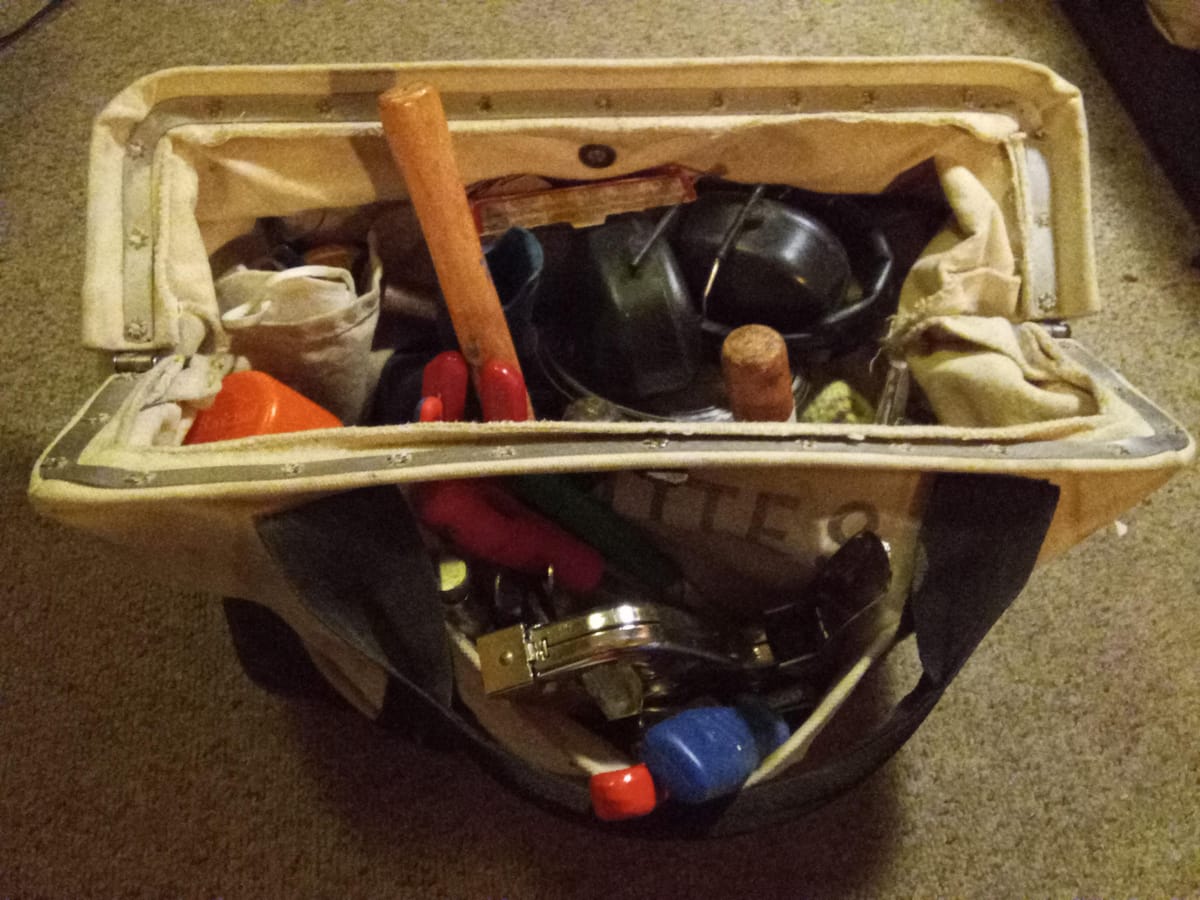
kits are:
Reliable
- Kits are reliable if they're available.
- A kit, and all of the tools in it, need to be ready at a moment's notice.
- All tools must stay with the kit. If a kit is missing a tool it is not reliable.
- Put your name (and maybe contact info) on important tools (and the kit itself!), just in case they walk off.
- A kit should always be stored in the same place when not in use. When a kit's task is completed, put all the tools back into the kit and put the kit back to where it lives (it's holster). The environment (studio, workshop, home, lab, vehicle) is a kit (of kits).
- Don't let anyone borrow a kit unless it is a duplicate or spare kit for loaning.
- Always bring the whole kit with you to work on a task.
- When using a tool from a kit, the farther you separate the tool from the kit, the more likely it is that the tool will not make it back to the kit.
- Even if I think I need just 1 tool from a kit to complete a task, more often than not I end up needing other tools. Bringing the whole kit saves me the trip back to grab other tools from it. Plus lugging the whole kit is good exercise.
- Routinely review the contents of the kit.
- It can be helpful to keep a pack-list of kit components. Digital spreadsheets are handy and it can be clutch to keep a copy of the pack-list in the kit itself. Yearly is a good cadence for pack-list review.
- For each item on the pack-list note:
- name of thing
- section/sub- section of the kit it lives in
- expiration date if applicable
- last seen (during review, note that you saw the item on that date)
- does it need replacement or maintenance?
- number of this item that are in the kit
- notes
Lean
- Kits are mobile and need to be manageable: not too heavy, bulky, or hard to sort through.
- Kits should minimize the depth a user must search for a tool.
- Modularization/sub-kits can help with this.
- Ideally everything is visible at a glance and grabable with 1 hand.
- Kits need to retain structural and organizational integrity even when reasonably tossed or packed with other things.
Coherent
- It helps if a kit fits a theme. You know to grab the first aid kit if you are bleeding. It's not where you keep your 3.5mm headphone jack cables or your hammer.
- Have one of every tool you might need for a set of tasks (theme).
- Themes can be vague if it suits you and you understand it. For example I carry an 'everyday handy tools' kit.
Inexpensive
- Start with what you have already and put it in any bag or box: that's your kit.
- At the same time don't be afraid to spend money. You shouldn't struggle using the wrong tool for the job. Upgrade the kit over time as necessary. Get the best tools you can afford if you expect to get use out of them for a long time.
- You don't need to buy brand new everything and research the best tool for everything. Building a kit is not the point, doing things with the kit is the point.
Some examples of kits that I maintain:
- general tool bag for fixing and making various things around the house or at Repair Cafe (seen above)
- computer repair
- bycycle maintenance
- sewing
- first aid
- sound gear
- toiletries
- go bag
Though I object to the pretentiousness of parts of it and the way he builds a shelf, Van Neistat articulates some of this kit wisdom really well.
This treatise is about how to keep kits but also about how to keep yourself. A good kit is an extension of yourself. If your kit is reliable then you are more reliable.